Ah, revision. A topic we love, or hate, or love to hate. But one that we cannot fail to recognize as critical to good writing.
Here are a few favorite quotes on revision from some famous writers:
"In writing, you must kill all your darlings." William Faulkner
"Substitute 'damn' every time you're inclined to write 'very;' your editor will delete it and the writing will be just as it should be." Mark Twain (no longer true, but you get the idea)
Interviewer:"Was there some technical problem? What stumped you?"
Ernest Hemingway: "Getting the words right." (from an interview question on why Hemingway rewrote the ending of A Farewell to Arms so many times)
And finally, this gem:
"Let's say it's a mess. but you have a chance to fix it. You try to be clearer. Or deeper. Or more eloquent. Or more eccentric. You try to be true to a world. You want the book to be more spacious, more authoritative. You want to winch yourself up from yourself. You want to winch the book out of your balky hand. You try to liberate it. You try to get this wretched stuff on the page closer to what you think your book ought to be—what you know, in your spasms of elation, it can be. You read the sentences over and over. Is this the book I'm writing? Is this all?" Susan Sontag
Are you comfortable revising? Do you love it? Do you merely tolerate it?
It seems that as we mature as writers we come to embrace revision because, as Sontag says, we have a chance to fix our mess. Once we realize that everyone creates a mess that has to be fixed, and that revision comes with the deal if you want to write, we can get excited about this phase of the process.
What are your favorite things about revising? Do you have any fun revision stories or quotes (yours or someone else's) you can share?
Monday, March 25, 2013

Monday, March 18, 2013
Tap Into Your Creativity—Let Your Cat Help
The love between writers and cats is storied. The likes of T.S. Eliot, Edward Gorey, Ernest Hemingway and others have written poems, stories and snippets about the special connection. What is this special thing? It's mystical, playful, a form of connection that, under the right circumstances, can translate somehow into a flow of creative expression on the page.
If you are a cat lover (and I know not all writers are, although I find that fact to be astounding!), then you know what I'm talking about.
While reading one of my favorite websites (brainpickings.org), I came across a charming description of this mysterious process. Brainpickings writer, Maria Popova, in her article, How a Cat Boosts Your Creativity, offered this passage from a book by Muriel Sparks:
“… the tranquility of the cat will gradually come to affect you.”
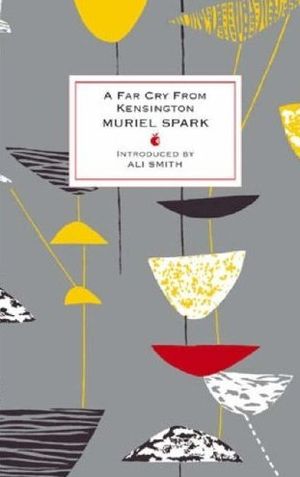 History is laced with cat-loving creators, fromHemingway’s profound affection for his felines toEdison’s pre-YouTube boxing cats to the traditions of Indian folk art. But hardly anyone has made a greater case for the cat as a creative stimulant and a mystical muse of writing than Muriel Spark in this wonderful passage from A Far Cry from Kensington (public library):
I've gone back and forth between writing on my laptop and writing longhand at my desk. I like both, but find computer-writing a less creative process. Reading this snippet from Muriel Spark gave me all sorts of visualizations of the times my cats "assisted" me at my desk by lying down in front of me with at least a hind paw or the tip of a tail touching my writing paper, while they snoozed or otherwise demonstrated their extreme nonchalance. (Writing at the computer with a 12-pound cat taking up my whole lap and wanting to put her paws on the keyboard all the time was a bit more challenging.)
As some of you know, I am sadly catless at the moment. Our kitties lived long, good lives, (to 19 and 21), and they are sorely missed. I've enjoyed being able to travel without worrying about them, though. And not having to clean the catbox has been a treat. But it might be time for a cat in my life again. Just the idea of one snoozing under my desklamp while I write is enough to make me smile.
How about you? Do you like having a cat with you when you write? Do you tap into the mysterious and powerful cat-muse energies? Have you found this type of energy from other pets?
If you are a cat lover (and I know not all writers are, although I find that fact to be astounding!), then you know what I'm talking about.
While reading one of my favorite websites (brainpickings.org), I came across a charming description of this mysterious process. Brainpickings writer, Maria Popova, in her article, How a Cat Boosts Your Creativity, offered this passage from a book by Muriel Sparks:
“… the tranquility of the cat will gradually come to affect you.”
History is laced with cat-loving creators, fromHemingway’s profound affection for his felines toEdison’s pre-YouTube boxing cats to the traditions of Indian folk art. But hardly anyone has made a greater case for the cat as a creative stimulant and a mystical muse of writing than Muriel Spark in this wonderful passage from A Far Cry from Kensington (public library):If you want to concentrate deeply on some problem, and especially some piece of writing or paper-work, you should acquire a cat. Alone with the cat in the room where you work … the cat will invariably get up on your desk and settle placidly under the desk lamp. The light from a desk lamp … gives a cat great satisfaction. The cat will settle down and be serene, with a serenity that passes all understanding. And the tranquility of the cat will gradually come to affect you, sitting there at your desk, so that all the excitable qualities that impede your concentration compose themselves and give your mind back the self-command it has lost. You need not watch the cat all the time. Its presence alone is enough. The effect of a cat on your concentration is remarkable, very mysterious.
I've gone back and forth between writing on my laptop and writing longhand at my desk. I like both, but find computer-writing a less creative process. Reading this snippet from Muriel Spark gave me all sorts of visualizations of the times my cats "assisted" me at my desk by lying down in front of me with at least a hind paw or the tip of a tail touching my writing paper, while they snoozed or otherwise demonstrated their extreme nonchalance. (Writing at the computer with a 12-pound cat taking up my whole lap and wanting to put her paws on the keyboard all the time was a bit more challenging.)
As some of you know, I am sadly catless at the moment. Our kitties lived long, good lives, (to 19 and 21), and they are sorely missed. I've enjoyed being able to travel without worrying about them, though. And not having to clean the catbox has been a treat. But it might be time for a cat in my life again. Just the idea of one snoozing under my desklamp while I write is enough to make me smile.
How about you? Do you like having a cat with you when you write? Do you tap into the mysterious and powerful cat-muse energies? Have you found this type of energy from other pets?
Monday, March 11, 2013
Reading Poetry Can Improve Your Fiction Writing
I was skeptical of poetry for many years. Maybe because it's such a demanding form that a lot of the poetry that's out there isn't really great. Then I began to discover poets who blew me away, and realized how varied poetry is, and how important it is for fiction writers to find poetry that speaks to them and resonates deep within them. I believe this applies to all types of fiction writers in all genres, whether literary of YA fantasy or mystery or any other.
Why? Because an awareness of and love for words, and a sense of how to use words to have the greatest impact and be the most compelling, are keys to good writing that we can learn from poetry. We want to write in a way that uses clear, meaningful combinations of words that seem simple and specific (even when the phrases are metaphorical), and that both communicate the message we are trying to get across, and do that in a way that is fresh, sometimes surprising, and has—especially at moments of emphasis—a beat. Those qualities are guaranteed to draw readers in. Literary agents and publishers are always hoping for exactly that type of writing.
Great poetry can help us get there. If we read it out loud on a regular basis, to hear and feel the rhythms and the impact of the word combinations, it helps us get there faster.
Last week I posted about Ann Patchett's excellent sentences, and how they draw me back to her writing even when I think I'm tired of reading. If you scrolled down to her LA TIMES interview at the bottom of the post, you no doubt saw that she believes every writer should have a deep love of poetry from the time they are a child.
While I agree that being transported by poetry as a child can give writers a big advantage in developing their own successful writing style, it's not an advantage that can only be obtained in childhood. We can learn this skill at a later age. Contemporary brain scientists have discovered that our neurons are incredibly adaptable—if we spend time regularly practicing an ability, the neural capacity for that ability grows physically within our brains, making us more naturally adept at performing it. This is true at any age.
One of the poets whose work I love is W. B. Yeats. He published poems over a forty-year timespan—from 1899 until the late 1930s. Below is one of my favorites of his poems. It's about a man at the end of a stellar career in the public eye, realizing how much of his achievement in climbing the ladder of success was built on showmanship using props (circus animals, as he calls them), rather than meaning; and how, having come full circle, he feels empty at this late stage—back to "the foul rag and bone shop of the heart."
The Circus Animals' Desertion
by W. B. Yeats
I
I sought a theme and sought for it in vain,
I sought it daily for six weeks or so,
Maybe at last being but a broken man
I must be satisfied with my heart, although
Winter and summer till old age began
My circus animals were all on show,
Those stilted boys, that burnished chariot,
Lion and woman and the Lord knows what.
II
What can I but enumerate old themes,
First that sea-rider Oisin led by the nose
Through three enchanted islands, allegorical dreams,
Vain gaiety, vain battle, vain repose,
Themes of the embittered heart, or so it seems,
That might adorn old songs or courtly shows;
But what cared I that set him on to ride,
I, starved for the bosom of his fairy bride.
And then a counter-truth filled out its play,
'The Countess Cathleen' was the name I gave it,
She, pity-crazed, had given her soul away
But masterful Heaven had intervened to save it.
I thought my dear must her own soul destroy
So did fanaticism and hate enslave it,
And this brought forth a dream and soon enough
This dream itself had all my thought and love.
And when the Fool and Blind Man stole the bread
Cuchulain fought the ungovernable sea;
Heart mysteries there, and yet when all is said
It was the dream itself enchanted me:
Character isolated by a deed
To engross the present and dominate memory.
Players and painted stage took all my love
And not those things that they were emblems of.
III
Those masterful images because complete
Grew in pure mind but out of what began?
A mound of refuse or the sweepings of a street,
Old kettles, old bottles, and a broken can,
Old iron, old bones, old rags, that raving slut
Who keeps the till. Now that my ladder's gone
I must lie down where all the ladders start
In the foul rag and bone shop of the heart.
If you read this poem out loud a couple of times, does it affect you?
Do you have a favorite poet? Is his or her work oriented toward nature, or fantasy, or love, or futurism, or something else?
Why? Because an awareness of and love for words, and a sense of how to use words to have the greatest impact and be the most compelling, are keys to good writing that we can learn from poetry. We want to write in a way that uses clear, meaningful combinations of words that seem simple and specific (even when the phrases are metaphorical), and that both communicate the message we are trying to get across, and do that in a way that is fresh, sometimes surprising, and has—especially at moments of emphasis—a beat. Those qualities are guaranteed to draw readers in. Literary agents and publishers are always hoping for exactly that type of writing.
Great poetry can help us get there. If we read it out loud on a regular basis, to hear and feel the rhythms and the impact of the word combinations, it helps us get there faster.
Last week I posted about Ann Patchett's excellent sentences, and how they draw me back to her writing even when I think I'm tired of reading. If you scrolled down to her LA TIMES interview at the bottom of the post, you no doubt saw that she believes every writer should have a deep love of poetry from the time they are a child.
While I agree that being transported by poetry as a child can give writers a big advantage in developing their own successful writing style, it's not an advantage that can only be obtained in childhood. We can learn this skill at a later age. Contemporary brain scientists have discovered that our neurons are incredibly adaptable—if we spend time regularly practicing an ability, the neural capacity for that ability grows physically within our brains, making us more naturally adept at performing it. This is true at any age.
One of the poets whose work I love is W. B. Yeats. He published poems over a forty-year timespan—from 1899 until the late 1930s. Below is one of my favorites of his poems. It's about a man at the end of a stellar career in the public eye, realizing how much of his achievement in climbing the ladder of success was built on showmanship using props (circus animals, as he calls them), rather than meaning; and how, having come full circle, he feels empty at this late stage—back to "the foul rag and bone shop of the heart."
The Circus Animals' Desertion
by W. B. Yeats
I
I sought a theme and sought for it in vain,
I sought it daily for six weeks or so,
Maybe at last being but a broken man
I must be satisfied with my heart, although
Winter and summer till old age began
My circus animals were all on show,
Those stilted boys, that burnished chariot,
Lion and woman and the Lord knows what.
II
What can I but enumerate old themes,
First that sea-rider Oisin led by the nose
Through three enchanted islands, allegorical dreams,
Vain gaiety, vain battle, vain repose,
Themes of the embittered heart, or so it seems,
That might adorn old songs or courtly shows;
But what cared I that set him on to ride,
I, starved for the bosom of his fairy bride.
And then a counter-truth filled out its play,
'The Countess Cathleen' was the name I gave it,
She, pity-crazed, had given her soul away
But masterful Heaven had intervened to save it.
I thought my dear must her own soul destroy
So did fanaticism and hate enslave it,
And this brought forth a dream and soon enough
This dream itself had all my thought and love.
And when the Fool and Blind Man stole the bread
Cuchulain fought the ungovernable sea;
Heart mysteries there, and yet when all is said
It was the dream itself enchanted me:
Character isolated by a deed
To engross the present and dominate memory.
Players and painted stage took all my love
And not those things that they were emblems of.
III
Those masterful images because complete
Grew in pure mind but out of what began?
A mound of refuse or the sweepings of a street,
Old kettles, old bottles, and a broken can,
Old iron, old bones, old rags, that raving slut
Who keeps the till. Now that my ladder's gone
I must lie down where all the ladders start
In the foul rag and bone shop of the heart.
If you read this poem out loud a couple of times, does it affect you?
Do you have a favorite poet? Is his or her work oriented toward nature, or fantasy, or love, or futurism, or something else?
Monday, March 4, 2013
The Importance of Sentences; and, Writing Advice from Ann Patchett
Have you read STATE OF WONDER, 2011's big novel from Ann Patchett? She's an amazing writer—a literary writer, but she experiments, and her experiments can swerve into genre. STATE OF WONDER is sort of a suspense/mystery novel, set in the Amazon with some fascinating characters and an interesting speculative external plot line involving medical research and the money behind it (which doesn't seem far from truth).
Patchett has written a number of acclaimed novels (BEL CANTO is the most famous). What attracts me to her writing the most is the way she writes sentences.
I am unashamedly story-oriented rather than language-oriented in my reading choices. Give me a great story any time. So this irresistible attraction to well-crafted sentences over story is something I find interesting, to say the least. In Patchett's novels, the plots aren't always what I would choose to read, given good choices, and sometimes I don't even find the characters particularly sympathetic. But I find myself drawn back to her books within minutes of putting them down for a break, as if by an invisible thread pulling me into those sentences. They are crafted with some sort of simple magic. I just want to read them, to let them wash over me with their freshness and depth. This from a traditional-story girl!
Plot, characterization, pace—all critical and all basic. If we get those three down, we can write a publishable book. But if we want to improve our craft to the point of WOW, we need to understand sentences.
Easier said than done.
We can eliminate unnecessary adverbs and adjectives, and choose strong nouns and verbs. We can vary our sentence lengths. We can imbue our sentences with the voice of our characters. We can even eliminate any sentence that doesn't either further the plot or illuminate character. All good. But if the results are not the magically simple but compelling sentences we're after, one after another, we can't learn how to make them that way without finding the secret well within us that holds them. I don't believe that that's actually teachable.
So how do we find our own well of wonderfully compelling sentences? Not fancy or complicated sentences, but pithy ones that hit the mark with precision and boost readers to the next, and the next, and so on? I think maybe it has to do with building an awareness of and love for words, deep within us, through reading and listening to stories and poetry over many years. The kinds of stories and poems that resonate deep inside. Hearing, feeling, and speaking them. Then, we have to trust ourselves and let go. Let our own sentences come out on the page, knowing that a lot of editing will likely be needed, even then. It's like burrowing down past the surface stuff that comes out, reaching for a deeper, simpler level, so that our sentences can sing.
It's an important area that's difficult to get a grasp on, so when I see advice on writing from a writer who has achieved this enviable feat, I'm definitely interested! Below is a 2011 article from the Books section of the Los Angeles Times, that highlights some of Patchett's ideas. The second piece of advice (in the red section) strikes me as particularly powerful and important for all of us. I think I'll be clicking on the hyperlink to get a copy of "The Getaway Car."
Do you have an insight to share on writing great sentences? Where do they come from for you?
For your enjoyment . . .
Patchett has written a number of acclaimed novels (BEL CANTO is the most famous). What attracts me to her writing the most is the way she writes sentences.
I am unashamedly story-oriented rather than language-oriented in my reading choices. Give me a great story any time. So this irresistible attraction to well-crafted sentences over story is something I find interesting, to say the least. In Patchett's novels, the plots aren't always what I would choose to read, given good choices, and sometimes I don't even find the characters particularly sympathetic. But I find myself drawn back to her books within minutes of putting them down for a break, as if by an invisible thread pulling me into those sentences. They are crafted with some sort of simple magic. I just want to read them, to let them wash over me with their freshness and depth. This from a traditional-story girl!
Plot, characterization, pace—all critical and all basic. If we get those three down, we can write a publishable book. But if we want to improve our craft to the point of WOW, we need to understand sentences.
Easier said than done.
We can eliminate unnecessary adverbs and adjectives, and choose strong nouns and verbs. We can vary our sentence lengths. We can imbue our sentences with the voice of our characters. We can even eliminate any sentence that doesn't either further the plot or illuminate character. All good. But if the results are not the magically simple but compelling sentences we're after, one after another, we can't learn how to make them that way without finding the secret well within us that holds them. I don't believe that that's actually teachable.
So how do we find our own well of wonderfully compelling sentences? Not fancy or complicated sentences, but pithy ones that hit the mark with precision and boost readers to the next, and the next, and so on? I think maybe it has to do with building an awareness of and love for words, deep within us, through reading and listening to stories and poetry over many years. The kinds of stories and poems that resonate deep inside. Hearing, feeling, and speaking them. Then, we have to trust ourselves and let go. Let our own sentences come out on the page, knowing that a lot of editing will likely be needed, even then. It's like burrowing down past the surface stuff that comes out, reaching for a deeper, simpler level, so that our sentences can sing.
It's an important area that's difficult to get a grasp on, so when I see advice on writing from a writer who has achieved this enviable feat, I'm definitely interested! Below is a 2011 article from the Books section of the Los Angeles Times, that highlights some of Patchett's ideas. The second piece of advice (in the red section) strikes me as particularly powerful and important for all of us. I think I'll be clicking on the hyperlink to get a copy of "The Getaway Car."
Do you have an insight to share on writing great sentences? Where do they come from for you?
For your enjoyment . . .
From the Los Angeles Times/Books
 Ann Patchett is the author of this summer's bestselling "State of Wonder," which followed 2001's "Bel Canto," which won the Orange Prize. The author has compiled many of her thoughts on writing into a single interesting, sometimes contradictory piece, "The Getaway Car," published Monday by Byliner.
Ann Patchett's lessons on writing, from Byliner


"The Getaway Car" was published by Byliner as a Kindle single and is available for $2.99 from Amazon. Byliner, which publishes stand-alone nonfiction, launched in April with Jon Krakauer's "Three Cups of Deceit" and has published electronic stories from William T. Vollman, Tad Friend, Jamie Malanowski and others. Krakauer's story, which posed serious questions about Greg Mortenson's memoir and his charity's work, is now also available in print.
There's a little something for every hopeful writer in Patchett's "The Getaway Car." Patchett discusses, among other things, loving writing while also hating it, creative writing MFAs (she has one from Iowa, but that doesn't mean she's a fan), when do to research, writers Elizabeth McCracken and Raymond Chandler, what she says when people ask her how to get an agent, procrastination, reading aloud, and waitressing at TGI Friday's.
These fragments of writing advice are all taken from her piece.
A deep, early love of poetry should be mandatory for all writers.Most of us are full up with bad stories, boring stories, self-indulgent stories, searing works of unendurable melodrama. We must get all of them out of our system in order to find the good stories that may or may not exist in the fresh water underneath.You don't step out of the stream of your life to do your work.Novel writing, I soon discovered, is like channel swimming: a slow and steady stroke over a long distance in a cold, dark sea.The ability to write and the ability to teach are not the same, and while I've known plenty of people who could do both, there are also plenty of people who can do only one or the other, and plenty who do both who should be doing neither.
Monday, February 25, 2013
Phrases We Love—Where'd They Come From?
We all love words, right? We wouldn't be doing this insanely wonderful and frustrating work if we didn't. So when we have moments that take us to the root of our word love, it can feel like kismet.
Some of the metaphorical phrases we use regularly just trip right off our tongues without us having a clue as to how they originally came about, or even what they mean in a literal sense, but we do know what they mean metaphorically. In fact, they've often become cliché, they're used so easily.
For example:
Some of the metaphorical phrases we use regularly just trip right off our tongues without us having a clue as to how they originally came about, or even what they mean in a literal sense, but we do know what they mean metaphorically. In fact, they've often become cliché, they're used so easily.
For example:
- He was down at the heels.
- She waited for the answer with bated breath.
- Strewth! (yeah, no one actually says that any more, but those of you writing about medieval knights or Robin Hood have at least thought about putting it in your ms., admit it)
Down at the heels: literally, when a person's shoe heels wear down . . . a visual sign that they haven't got the resources to get their shoes re-heeled or buy new ones (because, as a matter of pride, a person wouldn't be seen in public with worn out shoes if he could possibly help it—this was true in this country nearly everywhere a couple of generations ago, and still is in many places.) We use it metaphorically to mean poor or in a bad streak financially.
Bated breath: this one was a puzzler to me in terms of both where it came from and what it literally means. Bated? Should it really be baited with an 'i?' And how can you bait breath, anyway? I just couldn't get the visual on that. I finally asked a British friend (they always know this stuff), and he said he was "quite sure it comes from the longer, traditional word, 'abated.' It was probably originally written with a hyphen, as in, 'bated." Ah, of course. Abated means stopped, so it's a way of saying she was so anxious or excited that she stopped breathing until she got the answer. That fits with what I know the phrase suggests.
Strewth! (I think the exclamation point is mandatory): an oath, often spoken as an exclamation of extreme disbelief or fear or outrage. I felt wonderfully enlightened when I found out it's a contraction of 'God's Truth!' Heh.
Did you know where these phrases came from? And more importantly, do you have one or two of your own you'd be willing to share? I'd love to collect a whole list and publish it as a post, just for fun (and kismet).
Strewth! (I think the exclamation point is mandatory): an oath, often spoken as an exclamation of extreme disbelief or fear or outrage. I felt wonderfully enlightened when I found out it's a contraction of 'God's Truth!' Heh.
Did you know where these phrases came from? And more importantly, do you have one or two of your own you'd be willing to share? I'd love to collect a whole list and publish it as a post, just for fun (and kismet).
Monday, February 18, 2013
Writing a Character's Dark Side
The dark side is not only for two-dimensional villains and vampires. It's part of everyone in real life who has lived more than a couple of years. To express that in a character—whether villain or hero—to tap into the power that comes from showing truths about the character's deepest self, and thereby creating a complex, conflicted character, is one of the biggest challenges writers face. Why? Well, there are probably lots of answers to that particular question, but I'm going to suggest that it's because our "deepest self," warts and all, is something most people are uncomfortable examining, much less expressing for public consumption.
But most people aren't writers, you say. We writers examine these things.
Do we? Well, yes, with varying degrees of bravery and skin in the game. I'm just sayin . . . it ain't easy. But it's sure as heck worth it.
The most riveting characters in literature are the deeply conflicted ones—the ones who are driven to behave in certain ways that go against the grain of what they know to be upright and good, for example. Anti-heroes are classic examples of that type of inner conflict. Think Scarlett O'Hara in Gone With the Wind and Rick of Rick's Café Americain in Casablanca.
At least Scarlett and Rick get a chance for redemption at the end of their stories. But then there's the even more complex character, the dark tragic hero who honest-to-god believes himself to be someone who strives to do what's noble (and makes sure the world sees him that way), but is, in fact, driven by lower orders of need and desire. Dick Diver, the brilliant young psychiatrist in F. Scott Fitzgerald's Tender Is the Night, is such a hero. The tragedy is not that he sacrifices himself for truth or right (as a more conventional hero might), but that he doesn't, in the end, actually see his own truth (although the perceptive reader does). His sacrifice is not heroic, after all. He turns out to be a lost soul and doesn't know it. He just knows things didn't work out for him.
Of course, the same is true of villains—the most memorable, impactful ones are the most complex and conflicted.
What is it, as a general rule, that gives these complex heroes and villains their dark side? If we can answer that question, we can learn how to add dimension and power to all our characters.
We have to consider not only whatever happened in the person's lifetime that affected them—whether they grew up in wealth or poverty, privilege or deprivation, or experienced a broken heart, violence or emotional trauma, for example—but intrinsic character, or personality, as well. It's not as if we can say that two plus two always equals four, because when it comes to character, that is just not true.
What does seem to be true, whatever the character or personality, is that darkness is most often the result of betrayal (large or small).
In simpler characters the betrayal may be represented as entirely external (the character's true love is killed in a senseless act of violence, e.g.), and his response is direct and proportional (he sets off on a path of bloody revenge).
In more complex characters it's never that simple. It just about always comes down to a powerful form of self-betrayal at a deep, soul level. Once that happens, the odds of being able to turn back are practically nil. I think that if we focus on what that involves, we can get to the source of how to write complex, conflicted, dark characters.
Life is messy. No one can go through it without doing some damage to their heart and values unless they live in a bubble. When the damage comes from the usual, average-impact behaviors of unhealthy selfishness or overweening need, it can usually be mended, leaving only slight scars that have the effect of toughening and strengthening the core with their mending. But people can also make choices that do insidious lasting damage to their deepest selves, and that is what our dark, conflicted characters have done.
There's something our character wants, something he desperately needs. When he sees the opportunity to grasp it he does so, and damn the consequences. Maybe it's love at any cost, or revenge, or power. Maybe it's safety, which he can get by remaining silent in a volatile situation. Maybe it's to be revered by others. We all want and need something like these things sometime. It's part of being human. But our character's need is ramped up. The stakes are high. When he reaches out to grasp what he wants, there's a little voice telling him that there has to be a better way—it is wrong to get it this way. That voice comes from his deepest self, but it is silenced by the need. The character takes what he needs in spite of the warning from deep within.
A deeply conflicted character can only exist in someone who is aware of and in touch with his deepest self and knows the purity that existed there, then behaves in a way that is contradictory to that knowledge. That is self-betrayal. And you know it's going to come back to bite. A shadow begins to grow.
Voilà. The inner conflict. The complexity. The dark side.
Who are your favorite dark heroes or villains in literature?
But most people aren't writers, you say. We writers examine these things.
Do we? Well, yes, with varying degrees of bravery and skin in the game. I'm just sayin . . . it ain't easy. But it's sure as heck worth it.
The most riveting characters in literature are the deeply conflicted ones—the ones who are driven to behave in certain ways that go against the grain of what they know to be upright and good, for example. Anti-heroes are classic examples of that type of inner conflict. Think Scarlett O'Hara in Gone With the Wind and Rick of Rick's Café Americain in Casablanca.
At least Scarlett and Rick get a chance for redemption at the end of their stories. But then there's the even more complex character, the dark tragic hero who honest-to-god believes himself to be someone who strives to do what's noble (and makes sure the world sees him that way), but is, in fact, driven by lower orders of need and desire. Dick Diver, the brilliant young psychiatrist in F. Scott Fitzgerald's Tender Is the Night, is such a hero. The tragedy is not that he sacrifices himself for truth or right (as a more conventional hero might), but that he doesn't, in the end, actually see his own truth (although the perceptive reader does). His sacrifice is not heroic, after all. He turns out to be a lost soul and doesn't know it. He just knows things didn't work out for him.
Of course, the same is true of villains—the most memorable, impactful ones are the most complex and conflicted.
What is it, as a general rule, that gives these complex heroes and villains their dark side? If we can answer that question, we can learn how to add dimension and power to all our characters.
We have to consider not only whatever happened in the person's lifetime that affected them—whether they grew up in wealth or poverty, privilege or deprivation, or experienced a broken heart, violence or emotional trauma, for example—but intrinsic character, or personality, as well. It's not as if we can say that two plus two always equals four, because when it comes to character, that is just not true.
What does seem to be true, whatever the character or personality, is that darkness is most often the result of betrayal (large or small).
In simpler characters the betrayal may be represented as entirely external (the character's true love is killed in a senseless act of violence, e.g.), and his response is direct and proportional (he sets off on a path of bloody revenge).
In more complex characters it's never that simple. It just about always comes down to a powerful form of self-betrayal at a deep, soul level. Once that happens, the odds of being able to turn back are practically nil. I think that if we focus on what that involves, we can get to the source of how to write complex, conflicted, dark characters.
Life is messy. No one can go through it without doing some damage to their heart and values unless they live in a bubble. When the damage comes from the usual, average-impact behaviors of unhealthy selfishness or overweening need, it can usually be mended, leaving only slight scars that have the effect of toughening and strengthening the core with their mending. But people can also make choices that do insidious lasting damage to their deepest selves, and that is what our dark, conflicted characters have done.
There's something our character wants, something he desperately needs. When he sees the opportunity to grasp it he does so, and damn the consequences. Maybe it's love at any cost, or revenge, or power. Maybe it's safety, which he can get by remaining silent in a volatile situation. Maybe it's to be revered by others. We all want and need something like these things sometime. It's part of being human. But our character's need is ramped up. The stakes are high. When he reaches out to grasp what he wants, there's a little voice telling him that there has to be a better way—it is wrong to get it this way. That voice comes from his deepest self, but it is silenced by the need. The character takes what he needs in spite of the warning from deep within.
A deeply conflicted character can only exist in someone who is aware of and in touch with his deepest self and knows the purity that existed there, then behaves in a way that is contradictory to that knowledge. That is self-betrayal. And you know it's going to come back to bite. A shadow begins to grow.
Voilà. The inner conflict. The complexity. The dark side.
Who are your favorite dark heroes or villains in literature?
Monday, February 11, 2013
Do You Have Rules for Success?
How do we achieve success as writers? We are relentlessly drawn to reading advice on this subject. After all, finding our answer to that question is elemental to our drive and our desire.
The literary industry may be spinning in space right now, turned on its head by changes, and searching for its own identity and its own way to either hold on to or recapture success, but for writers, it always comes back to the work. (That should be The Work, I guess, to distinguish it as the writing itself, as opposed to all the extraneous factors involved in getting published.)
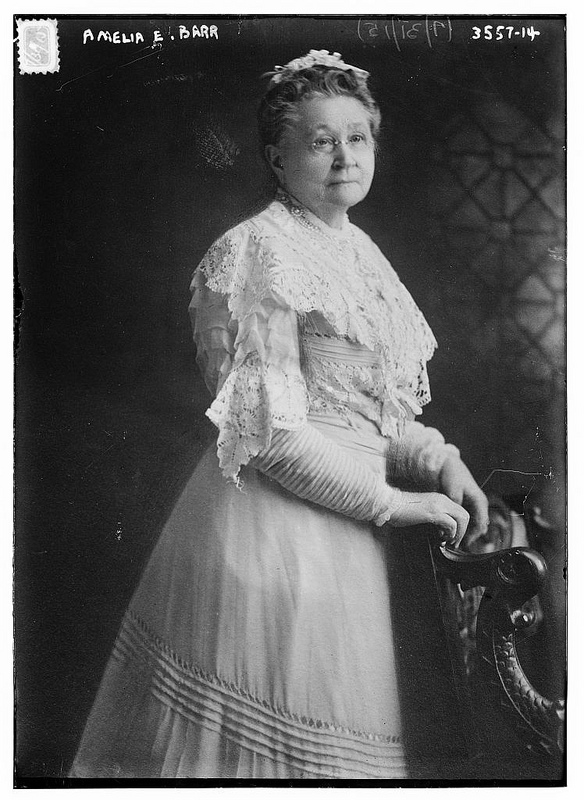
I recently came across an article* in which a 19th Century woman, Amelia Barr, who became a successful writer after many years of toil, offers nine rules for success. You'll notice some of them feel familiar, like favorite slippers we've broken in and depend on to keep our toes warm on our journey. My favorite is her wrap-up at the end. That last paragraph is going up on my writing wall. :)
Here, for your reading pleasure, is Amelia Barr's advice on how to succeed:
9 Rules For Success by British Novelist Amelia E. Barr, 1901
by Maria Popova
“Genius is nothing more nor less than doing well what anyone can do badly.”
 The secret of success — like its very definition — remains amorphous and forever elusive. For Thoreau, it was a matter of greeting each day with joy; for Jad Abumrad, it comes after somenecessary “gut churn”; for Jackson Pollock’s dad, it was about being fully awake to the world; for entrepreneur Paul Graham, it’s aboutpurpose rather than prestige; for designer Paula Scher, it means beginning every day with a capacity for growth. But perhaps, above all, success is about defining it yourself.
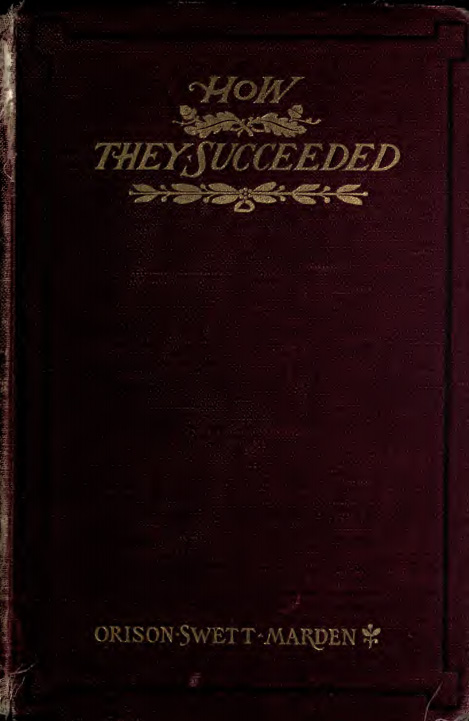
Still, those who have succeed — by their own definition, as well as history’s — might be able to glean some insight into the inner workings of accomplishment. From the 1901 volume How They Succeeded: Life Stories of Successful Men Told by Themselves (public library; public domain) comes a wonderful essay by British novelist Amelia E. Barr (1831-1919) who, the despite devastating loss of her husband and three of their six children to yellow fever in 1867, went on to become a dedicated and diligent writer, eventually reaching critical success at the age of fifty-two.
At the end of her essay, under a section titled “Words of Counsel,” Barr offers nine tips for success, echoing some familiar themes — Tchaikovsky’s insistence on work ethic over inspiration, Ray Bradbury’s case for perseverance in the face of rejection, the importance of having a good routine and working with joy, and the necessary reminder that success requires a deliberate investment of effortand good writing takes time.
*from the website: brainpickings.org
- Men and women succeed because they take pains to succeed. Industry and patience are almost genius; and successful people are often more distinguished for resolution and perseverance than for unusual gifts. They make determination and unity of purpose supply the place of ability.
- Success is the reward of those who “spurn delights and live laborious days.” We learn to do things by doing them. One of the great secrets of success is “pegging away.” No disappointment must discourage, and a run back must often be allowed, in order to take a longer leap forward.
- No opposition must be taken to heart. Our enemies often help us more than our friends. Besides, a head-wind is better than no wind. Who ever got anywhere in a dead calm?
- A fatal mistake is to imagine that success is some stroke of luck. This world is run with far too tight a rein for luck to interfere. Fortune sells her wares; she never gives them. In some form or other, we pay for her favors; or we go empty away.
- We have been told, for centuries, to watch for opportunities, and to strike while the iron is hot. Very good; but I think better of Oliver Cromwell’s amendment — “make the iron hot by striking it.”
- Everything good needs time. Don’t do work in a hurry. Go into details; it pays in every way. Time means power for your work. Mediocrity is always in a rush; but whatever is worth doing at all is worth doing with consideration. For genius is nothing more nor less than doing well what anyone can do badly.
- Be orderly. Slatternly work is never good work. It is either affectation, or there is some radical defect in the intellect. I would distrust even the spiritual life of one whose methods and work were dirty, untidy, and without clearness and order.
- Never be above your profession. I have had many letters from people who wanted all the emoluments and honors of literature, and who yet said, “Literature is the accident of my life; I am a lawyer, or a doctor, or a lady, or a gentleman.” Literature is no accident. She is a mistress who demands the whole heart, the whole intellect, and the whole time of a devotee.
Subscribe to:
Posts (Atom)