Wednesday, August 31, 2011

Reading Your Genre

What are the current bestselling novels in your genre? What are some of the all-time bestsellers in your genre? If you don't know the answers to these questions then chances are you're doing yourself a disservice by not reading your genre thoroughly enough. In this ever tightening market where publisher's lists are shrinking and competition is becoming fiercer, you need every advantage you can get. You don't have to write what sells, you can still write what's in your heart, but you must know what is selling. Knowledge is power.

When an agent or editor asks for comparables, you need to be able to give them accurate comps and the only way to do that is to be well read in your genre. If your answer is "it's completely original, there's nothing out there like it," chances are you may not be as well read as you should be. That answer is a red flag to agents and editors. Agent Ginger Clark recently tweeted something very similar to that statement. If your story is completely original (and it may be) that's great, but there are still comps out there. 

Maybe another author has a writing style that is reminiscent of yours, chances are it's someone you admire. I love lyrical novels with rich description and characters that I can clearly visualize, this is reflected in my own writing. Therefore my comps are novels that have a style which reflects those things. If you write in first person chances are your comps would be novels written in first person (though not always). If you write novels in multiple POV's, chances are your comps are novels that are written in multiple POV's. You can see where I'm going with this. There are always exceptions of course, but the idea is to know what's out there, know what you write, and support the industry you want to work in by reading.

On a personal side note, today is the last day to enter the Tour Of Secrets contest so if YA is your genre, stop by my blog to enter to win some great YA books or a gift certificate!

Monday, August 29, 2011

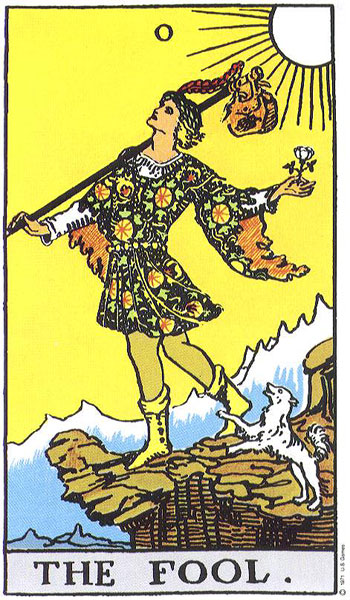
Can You Embrace Your Obsessions? Fool's Journey, Week 15

{To our readers on the East coast, we extend heartfelt wishes for weathering the aftermath of Hurricane Irene in as much comfort as possible. Hang in there! We are all rooting for you.}

Have you ever been writing along and taken a turn or two you didn't expect, pulled by one of your characters into a place you didn't plan to go and maybe didn't want to go? I suspect that if you write by the seat of your pants, rather than follow a detailed outline, this is more likely to happen. This suspicion might be false, based as it is on a certain level of envy I have for people who can write a whole novel using a detailed outline (and the assumption that they therefore don't get pulled off their planned path). But I can see how it might happen either way, and if you have had this experience, did it perhaps lead you into dark, murky territory that was difficult to navigate honestly and intelligently? Did the direction your character took you make you unreasonably angry, arrogant, dismissive, or scared; or just horribly uncomfortable? Ah, my writerly friends, that is, of course, where the good stuff is.

Tarot's Fool is about to demonstrate this point, by running straight into more 'good stuff' than he ever wanted to deal with in his lifetime.

He's just left Temperance, who blithely assured him that he, too, could learn to mix fire and water, and achieve alchemy, if he truly understood the power of opposites to create wholeness when properly blended together (Fool's Journey, Week 14). He doesn't doubt Termperance's truth, but mastery of such a thing is no small task, and it's really not part of his plan for achieving his quest. He'd much rather go the direct route, without the mumbo jumbo. (He's very tired from all his valiant questing, and has already grown greatly as a person on his journey. It would be really nice if the remainder of the path led straight to the Golden Fleece.)

He rounds a bend and stops in his tracks, so frightened by what blocks his path that he can hardly breathe. The Devil, winged, horned, and hooved, sits on a black pedestal, wearing an inverted pentagram as a crown. A naked man and woman stand before him, chained to the pedestal.

Staring, the Fool sees that the Devil is half goat, half god, and reigns over a massive black mountain. The naked people are engaging in every indulgence imaginable: sex, drugs, food, gold, drink. The Fool wants to turn and walk away, but he can't. He edges closer, and as he does so, his own earthy desires rise within him. Lust, passion, greed, obsession.

The Fool summons all his strength. "I refuse to give in to you!" he roars at the Devil. He digs his heels into the ground.

The Devil looks at him curiously. "I'm only bringing out what is already within you," he says. "Such feelings are nothing to fear, or to be ashamed of, or even to avoid."

"You expect me to believe such a thing?" the Fool responds. He gestures at the man and woman. "You say that even though they are enslaved?"

The Devil mimics the Fool's gesture. "Take another look."

When the Fool looks closer, he sees that the chained collars the man and woman wear are large enough that they could slip them off over their heads if they wanted to.

"They can be free if they wish to be," The Goat-god says. "It is true that I am the god of your strongest desires, but what you see here are only those who have allowed their base, bestial desires to control them." He points up to the peak of the mountain behind him. "You can't see those who have allowed their impulses and aspirations to take them to the top of the mountain."

"How did they get past you?" the Fool asks.

The Goat-god once again gives him a curious look. "Inhibitions can enslave as easily as excesses. They can keep you from following your passion to the highest heights."

The Fool realizes this god is not Satan, but Pan. He is a creature of great power, the lowest and the highest. He is both a beast and a god. Dangerous, but also the key to freedom and transcendence. Getting past him, scaling the mountain to its peak, is a matter of understanding that and using it well: embracing this knowledge, going for the gold by letting go of inhibitions, and then carrying the good that comes from that up the mountain. Once you have embraced your obsession and understood it, it no longer stands in your way, and neither does the Devil.

Whew. I need just a little break here so I can find my hand-painted paper fan and cool off a bit.

There, that's better.

Writers who are not afraid of going to their own dark places (or go there in spite of the fear) are the ones who can write those riveting scenes that have you cringing in recognition, eyes wide with horror at the ugly truth. Those are good. But the great ones go farther: they're about the state of grace that comes after the dark places. That state comes from respecting the ugliness, the obsession, because it's true; making the effort to understand it; recognizing its validity in their own lives; embracing it; and moving beyond it. If you've ever read a great writer who has embraced his or her obsessions so effectively that s/he can make readers empathize with any character, you can bet that writer has worn the yoke of chains, discarded it, and climbed the mountain.

~Linda
Links to Fool's Journey posts:  0—The Fool1—The Magician2—The High Priestess3—The Empress4&5—The Emperor, and The Hierophant6—The Lovers; 7—The Chariot8—Strength9—The Hermit; 10—Wheel of Fortune11—Justice12—The Hanged Man13—Death; 14—Temperance


My interpretation of The Fool's Journey as it applies to the writing life is my own, but the journey is long-established from a variety of sources. Those I've relied on most heavily are: TAROT BASICS by Burger & Fiebig, AECLECTIC TAROT by Thirteen, and EVERYDAY TAROT by Fairfield

Friday, August 26, 2011

Writing a Pitch the Easy Way!


"Compliments of Robert Dugoni from the PNWA"

How many of us struggle with our pitch? More importantly, what do you say when someone asks, “What’s your book about?”

Robert Dugoni presented the easiest way on how to write a pitch, that I’ve ever heard.

Ask yourself these questions:

1.     Who is the protagonist?
2.     What is the protagonist?
3.     Where is the protagonist?
4.     What does the protagonist want?
5.     What stands in the protagonist’s way?

My answers:

Kathryn Jacobs was on a fast track in a career that she loved with the National Transportation Safety Board until her life took a different direction. Now, ten years later she lives with her husband, Captain Bill Jacobs, and their twin daughters in Seattle Washington.  

Haunted by her past, and yearning for the career she'd given up, Kathryn’s offered an opportunity of a lifetime—to return to the N.T.S.B. to investigate a series of airline accidents. Unfortunately, Bill has other plans. 

While her husband is campaigning for his airline pilots' union presidency, Kathryn secretly investigates the mystery of these unexplained crashes. And the only thing stopping her from discovering the truth is a trail of deception paved by her husband.

Willing to tell us what your book is about? Take a shot and answer the five easy questions. We would love to hear from you.

Enjoy the Journey!

~ Karlene


Wednesday, August 24, 2011

First Sentences Final Critiques

Thank you to the talented ladies who offered up their sentences and to everyone who took part in helping with the critiques in the comments section. Now it's the critique sisters' turn. Here we go:

Sentence #1
Author: Joy N. Hensley 
First sentence: Maybe if I was wearing something that said "My dad just died and all I got was this lousy T-shirt," people would know to let me bypass all the lines and just go on my merry way. 
Karlene: Sentence 1. Joy, I love the attitude and feel it in the character. But, I agree maybe a bit too long. I like what you're doing here. What if... Maybe life would be different if I was wearing "My dad just died and all I got was this lousy T-shirt," across my chest.  
Heather: Joy,  your character sounds fun, sad, and a bit snarky, which I love. Immediately I get a good sense of her. However, she also sounds like she's in a really selfish place. If that's what you were going for great, but it didn't make me feel sympathetic to her like I wanted to. Don't worry though, I think it's an easy fix and you have a great start. Perhaps you could show her frustration, maybe even tears (that would make me very sympathetic), let us see the lines, the area, and feel her frustration then come in with this sentence.
Linda: It's tough to critique this sentence because I have a strong feeling that the next few sentences are going to provide context to the voice that we don't have here. From the intro the writer gave us, I'm guessing the protag is angry, rather than sarcastic, but either way you can't tell from this one sentence, and the word 'merry' particularly seems harsh, given the circumstances. If I'm right, and anger is our way into a strong protagonist dealing with a very difficult situation the best way she can, then I'm interested in her, and I think the sentence is effective. If she's being sarcastic and self-centered, that's a different story. I'd definitely read the next couple of paragraphs to find out.

                                                                     Sentence #2 
Author: Grechen  
First sentence: I shift uneasily on the old wooden bench, waiting for the sunrise to give me back a sense of color. Karlene: Sentence 2. Gretchen I love this. I'm hooked. 
Heather: I love it too! This is a great first sentence. It could be tightened up just a touch better by dropping the adverb 'uneasily'. To read: "I shift on the uneven slats of the old wooden bench, waiting for the sunrise to give me back a sense of color." This uses the environment (the bench) to show her unease. Make us feel the unease instead of telling us about it.
Linda: Strong sentence. I have a clear picture of the speaker having spent the night on a bench, probably outdoors. I'm aware of the speaker's emotional discomfort. The sensibility that puts getting back a sense of color top of mind in this situation is one that I'm interested in reading about. Nice job!  If you want to make it clear in this first sentence that the speaker is outdoors, you could add another sensory detail, like a cold breeze, or grass beneath her feet ,or the scent of the air, etc. One cautionary note: first person present tense is seriously hard to pull off in a novel-length story. It can grind down the reader's interest quickly if the writing's not topnotch throughout, because it is so limiting. Hunger Games aside, it's not for the feint of heart if you're not an experienced writer.

                                                                     Sentence #3

Author: Dora Dee 
First sentence: (in italics)Why were her mother and sister doing laundry today of all days, the last day of St. Rocco's Feast? Sunday mornings were always loud and noisy at her house. She hadn't heard Grazia's high-pitched voice insistently asked her mother's opinion on what to where to church while desperately rummaging through their meager downstairs closet and her brothers were fighting over the bathroom like they usually did. 
Karlene: Sentence 3. Dora, I love everything "after" the first sentence (fixing the grammar). 
Remember, the first line should leave a question, not necessarily be a question. What if the first sentence said something like ... Julia couldn't believe her mother and sister were doing laundry, today of all days. Thank you ladies for your examples. They were great! I'm looking forward to reading your books!
Heather: This concept sounds really interesting and I think you have some great characters here. I'd move the first sentence to the end of the first paragraph. Show us instead of tell us, then have your character come in with that thought. I agree with Karlene's fix. Then you could follow up with showing us the commotion of Sunday morning, the boys fighting over the bathroom, and Grazia asking her mother's opinion (be careful here though. If she doesn't hear it then you can't tell us it happened if we're in her point of view.) You have a great start! 
Linda: The strength in this first sentence is in the implication that things are not being done as usual in the household, and if you can expand on the reason that that is significant, you will strengthen the sentence a lot (does it raise serious suspicions in the protag because of something she knows? would her mother never do such a thing without a dire reason? etc). I'd leave St. Rocco's Feast out of the first sentence altogether. You can add that in somewhere in the next few sentences to emphasize the significance of the change in household routine. Italy in the 1950s is interesting. Given a good story, I'd definitely read about that.

Monday, August 22, 2011

Is the Publishing Industry on Your Last Nerve? Fool's Journey, Week 14


Ay yi yi! What's a writer to do? We are at the mercy of Dr. Seuss's Push-Me-Pull-You beast. Traditional publishing or self publishing? They're both major players in the publishing industry nowadays. Do we ask for a push into the insecure, prickly world of traditional publishing with its hidden trap doors over sour grapes, and no decent advance, but the chance to work with still-present angels who will help us weather the storms affecting the industry with dignity and success? Or do we let ourselves be pulled into the seductive realms of self publishing where we can get our work out there when we want to, but without it being honed in the high-quality fires of the traditional publishing industry? With self-pubbing we can potentially create our own fabulous success if we work like crazy at marketing and all the stars align just so in the night sky. These days it seems like a big gamble either way. How do we proceed? We are writers, not publishing gurus.

It might help to remember that our turmoils and toils are not new in the world of personal journeys. In fact, they are the stuff of legend, the heart of darkness in every hero's journey. As long as we are engaged in this battle for self-expression and success, we are living the hero's journey. It's an intense, powerful process with no easy answers, but if you are planning to succeed, you must not lose your resolve. A flinch here, an exhausted flop into coma-like sleep there to revive the synapses, are acceptable. You don't have to be a superhero. But you do have to persevere, and pay attention while you're at it.

If you're ready for a little metaphysical support to buoy your exhausted neural pathways, Tarot's Fool has this bit of wisdom to share from his journey to wholeness.

The Fool has just emerged from Death's grip (aka rejections, not a damn thing working right, self-doubt on a monstrous scale). He's been transformed by new insights and given new strength. He had to give up who he used to be to gain this purchase. He had to burn his old self to the ground, but in that sacrifice he found his True North and rose like a phoenix from the ashes (Fool's Journey,Week 13).

He's wondering how to reconcile the opposites he's facing now, though. He knows what he wants to do, knows that it is truly within him to do it, and is toiling away to succeed. He's achieved moral victory by identifying and nurturing that within him which is worthy, but he wants more. And that's where the opposite of his enthusiasm and hard-won confidence comes into the picture. He still faces blank obstacles to translating his spiritual success into material success.

He glances up, and there, on the path in front of him, is a winged figure standing with one foot in a brook and the other on a rock, pouring something from one flask to another in either hand. This is Temperance. Fascinated, he moves closer to the creature and sees that what is being poured from one flask is fire, while water flows from the other. The fire and the water are blending!

"How can you mix fire and water?" The Fool whispers.

"You must have the right vessels and the right proportions," Temperance answers.

"But . . ." The Fool stares, but his eyes do not deceive him. "Can this be done with all opposites?" he asks.

"Oh, yes," Temperance says, "any oppositions can be made to harmonize. It is only a lack of will and a disbelief in the possibility of unity that keeps opposites, opposite. When you find the right proportions and the right vessels, you create possibility, alchemy." She sees that The Fool is not convinced. "Think of the bow and arrow," she says. "When you use them together, one is moving, one is stationary. Opposites. But they work in harmony."

Yes, The Fool thinks. The bow and arrow are useless apart, but together they are a formidable weapon. He begins to see that he is the one who has held his spiritual growth and his material growth apart. He had to, to find his grounding, but he has the power to merge the two worlds. All it takes is the right vessels, and the right proportions.

The message is the same for us. As writers, we can easily get lost in our imaginary world of ideas, feelings and craft, or be pulled completely away into the world of hard material reality, but the fact is that the whole world, spiritual and material, is there for us and always has been. Once we are firmly grounded in our craft, it's time to open our arms to possibilities, because at some point they are going to fly in. We need to recognize the ones we want and to know how to blend them.

That means being aware of and paying attention to our own needs: do we love or hate the idea of doing our own marketing, and having more or less control over our own publishing process? Are we comfortable, and/or thankful to have others to do the job professionally for us if they've got a good record? Do we feel the quality-of-the-writing support offered by the traditional industry is important to our work?

We have our core to guide us because we've spent time becoming writers who are ready for publication and have had to find that core. In all the shedding of things that no longer work for us, we have not given up Strength (Fool's Journey, Week 8). With self-understanding and strength, we can blend fire and water--combine what we've always wanted with what's available and making sense for us. We can string our bow, position our arrow, and let it soar. No one decision is going to do us in. We have more arrows in our quiver.

~Linda
Links to Fool's Journey posts:  0—The Fool1—The Magician2—The High Priestess3—The Empress4&5—The Emperor, and The Hierophant6—The Lovers; 7—The Chariot8—Strength9—The Hermit; 10—Wheel of Fortune11—Justice12—The Hanged Man; 13—Death


My interpretation of The Fool's Journey as it applies to the writing life is my own, but the journey is long-established from a variety of sources. Those I've relied on most heavily are: TAROT BASICS by Burger & Fiebig, AECLECTIC TAROT by Thirteen, and EVERYDAY TAROT by Fairfield

Friday, August 19, 2011

More from the PNWA writers’ conference—Robert Dugoni.


People often ask me, “Who’s your favorite author?” I’ve never had an answer because I read so many different genres it’s hard to keep them straight. But if I had to make a list of favorites, Robert Dugoni would be on the top of that list.

During the PNWA conference, Robert presented part two of the ONE DAY WRITING SEMINAR.

Highlights from his talk, that we should all remember, include:
  • No preaching, it’s transparent. Cut. Cut. Cut.  
  • Research! But don’t show off by including it all. Bob only puts in about 5-10%
  • Avoid overblown prose. Don’t be “writerly”
  • Flashback stops the momentum of the story.
  • Avoid too much back-story—especially at the beginning.
  • Learn the craft by studying it. That’s what Bob did and it shows. 
  • With your first novel (and all those to follow) take yourself out of the protagonist and you wont’ be afraid your mother is going to read it.You will write better.
Robert Dugoni is not only an incredible author, but he spends a great deal of time helping authors achieve their dreams. He’s helped me more than I can say, and I’m not sure if he truly knows the far-reaching impact he’s made on the writing community. Not to mention he is one of the most genuine and kindest people I’ve met. On behalf of all of us, thank you Bob!

Robert’s books include:

Bodily Harm—Released May 25, 2010.
The Jury Master—Debut Novel and New York Times bestseller.
Damage Control—Number 8 on national independent booksellers’ list.
Wrongful Death—Sequel to Jury Master—“Among the best books of the year”
The Cyanide Canary—Washington Post best book of the year, 2004. Non-Fiction expose.

Robert Dugoni is just another reason joining the PNWA is something everyone should do. He is also one of the reasons I love the craft of writing—Authors helping other authors to achieve their dreams. Writers live in another world, and it’s great to be living in that world with wonderful people like Bob. 

Be proud to be an author—you’re among good people.  

I would love to add to Bob's list. If you have any wisdom on the art of writing, we would all love to hear it. Learning is a never ending process.

Enjoy the Journey!

~ Karlene 

Wednesday, August 17, 2011

First Sentences For Critique


Three wonderful, brave ladies have offered up their first sentences for critique. Since you peeps are so awesome I know I don't need to remind you that we want constructive criticism only. Honesty is a necessity of course, but sprinkling a bit of what you liked about it in there makes the advice go down better. Please leave comments on any one you wish but lets be sure to spread the helpfulness around if you see on that isn't getting comments. Here they are in no particular order:
 
Sentence #1
Short description: GEMMA-UP OVER YA about a girl who goes to Australia to hike after her dad dies and finds out the mom she thought was her mom isn't at all. Her mom is Australian and her dad was going to introduce them when they hiked. 
First sentence: Maybe if I was wearing something that said "My dad just died and all I got was this lousy T-shirt," people would know to let me bypass all the lines and just go on my merry way. 
 
Sentence #2
Author: Grechen
Short description: FOXTROT is a novel about a girl who's name is no longer her own. She must decide whether to give up her old identity in order to maintain her government mandated life or hold onto the shreds that are left of her old life.
First sentence: I shift uneasily on the old wooden bench, waiting for the sunrise to give me back a sense of color. 
 
Sentence #3
Author: Dora Dee 
Short description: The main protagonist is a nine year old girl. My novel takes place in Italy during the late 1950's. 
First sentence: (in italics)Why were her mother and sister doing laundry today of all days, the last day of St. Rocco's Feast? 
Sunday mornings were always loud and noisy at her house. She hadn't heard Grazia's high-pitched voice insistently asked her mother's opinion on what to where to church while desperately rummaging through their meager downstairs closet and her brothers were fighting over the bathroom like they usually did. 

Thank you in advance to everyone who helps out and leaves a comment. In the meantime, the critique sisters will work on these and we'll post our results next Wednesday. Let the comments commence!